Custom Dump Bodies
We fabricate dump bodies in a range of styles and sizes. Tell us the chassis and the work it is doing and we build to that.
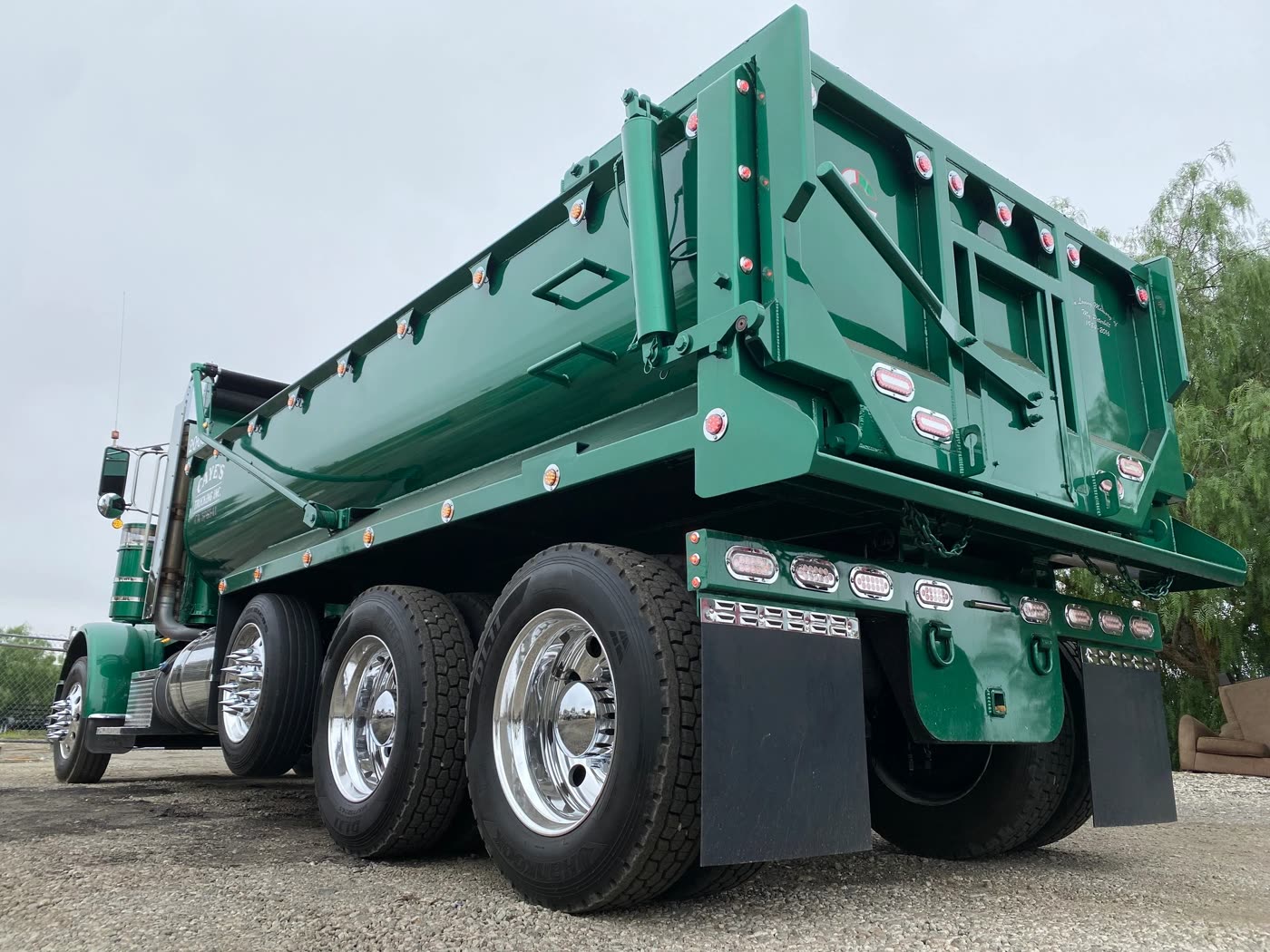
Not every truck fits a standard body. We build dump bodies in a range of styles and sizes to the chassis you have and the work it does, from the same AR400 through AR500 plate at 3/16 to 3/8 inch that goes into our standard bodies. Two questions set the build: what the chassis is, and what it hauls. Length, side height, gauge, gate, hoist and tarp all follow from those two answers.
Length starts with the chassis, and the weight law sits behind it. California Vehicle Code 35551 sets how much a group of consecutive axles may carry by the distance between the first and last axles of the group. That distance is measured to the nearest whole foot, and a fraction of exactly six inches rounds up to the next foot. Some limits do not move with spacing at all: a group of two axles is capped at 40,000 pounds however far apart they sit. A body with more capacity than the axles can legally carry is volume the truck cannot use.
Side height is where the body meets the covered load law. Vehicle Code 23114(e)(4) lets an aggregate load run uncovered only if it stays six inches from the upper edge where it meets the sides, front and back, and does not peak above that edge. A body meant to haul aggregate without a tarp needs sides tall enough to carry a useful load under that line. A body fitted with a tarp does not have to meet that exception, so it can be loaded fuller, within the weight limits.
Some of the construction is set by law for aggregate work, and it belongs in the drawing rather than on the truck afterwards. Under Vehicle Code 23114(b), the cargo area cannot have holes, cracks or openings the material can escape through. The same subdivision calls for working seals on any opening used to empty the load, tailgates included, complete enclosures on every vertical side of the cargo area, splash flaps behind every tire or set of tires, and shed boards to stop material landing on the vehicle body during top loading.
The body also has to clear the chassis it rides on. Chassis makers publish their minimums, and Peterbilt's body builder manual sets 8 inches between the top of the tire and the bottom of the body. That figure feeds directly into how tall the finished truck stands, and it is one of the reasons the chassis comes before the drawing.
Plate is picked to the material and to how the body is formed. Abrasion resistant grades are sold by hardness, and on a custom body the plate also has to take the bends in the design. SSAB describes its Hardox 500 as a bendable and weldable abrasion resistant steel, with plate bendability to its Class F bending guarantee. Thicker plate lasts longer against wear and weighs more, and under the axle limits that weight comes out of the load.
Options go on to suit the work: an air gate with a double lock, an electric tarp, and a hoist sized to the body's length and load. Every body is built in the USA.
Bring the chassis make, model, wheelbase and cab to axle measurement, what the truck hauls, and whether it will run covered. A drawing helps. So does a photo of a body you like.
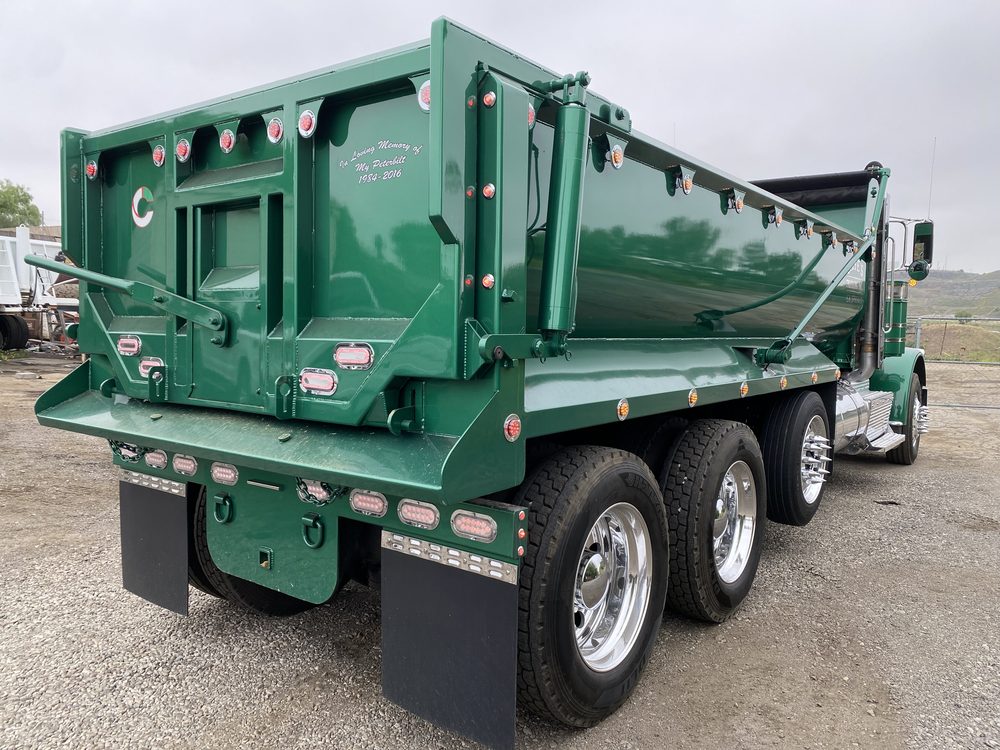
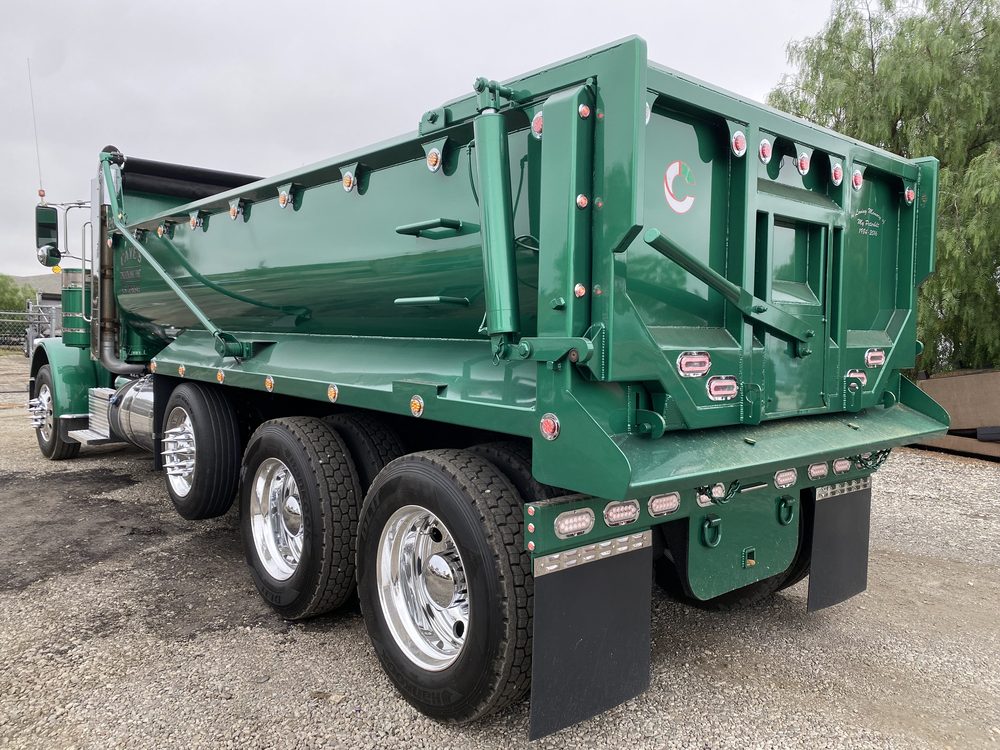
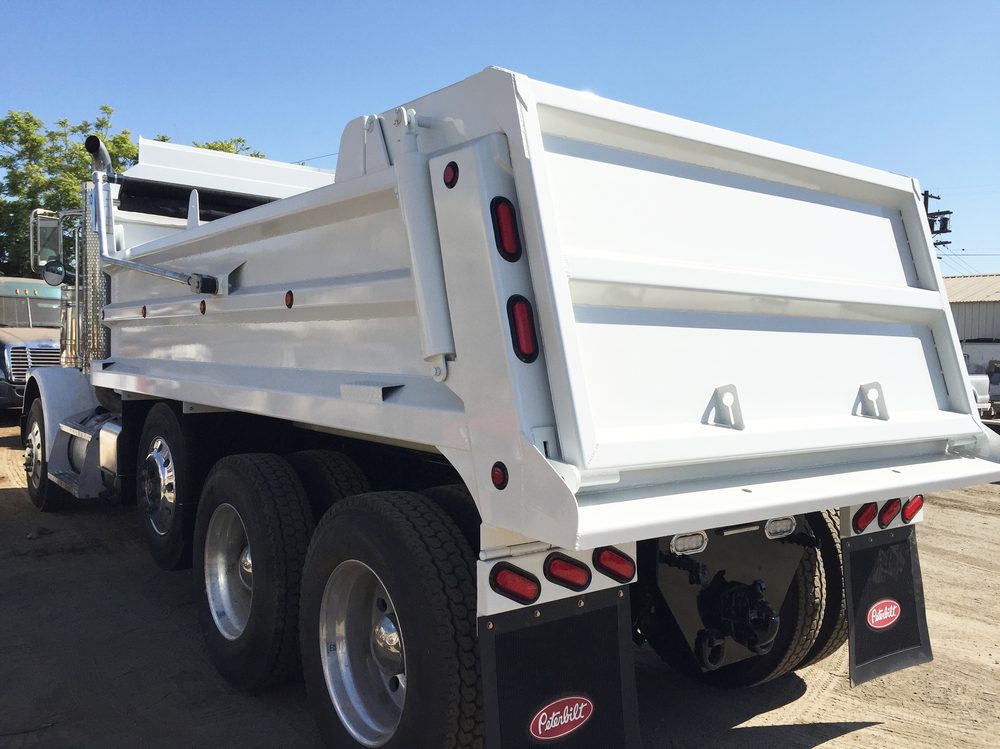
Work from our shops
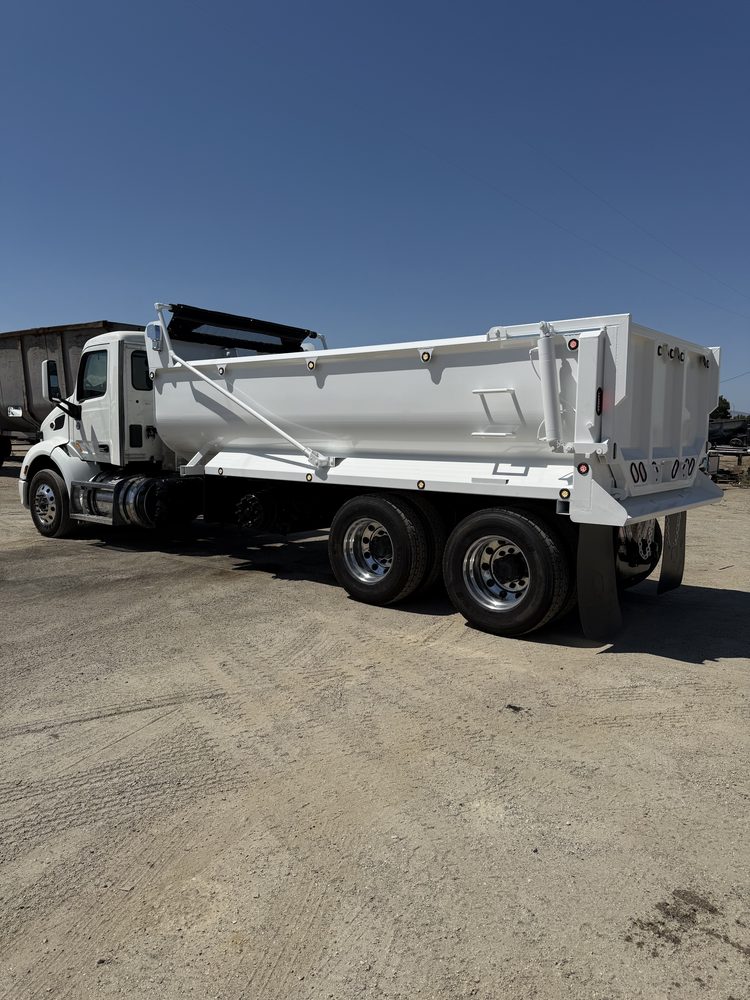
Questions about custom dump bodies
What do you need from me to quote?
How tall should the sides be?
Does a bigger body mean I can haul more?
Can you build for a chassis you have not built on before?
What does a body need for hauling aggregate in California?
Often paired with custom dump bodies
Need custom dump bodies?
Free estimates. Tell us the job and we will send back a spec and a price.