Steel Fences in Lancaster, CA
We fabricate custom steel fences for Lancaster properties, panel by panel, in our Division Street shop. The run is measured on site, each stretch gets the height its setback allows, and the panels are cut and welded to both before they leave the building.

How a steel fence is fabricated, step by step
-
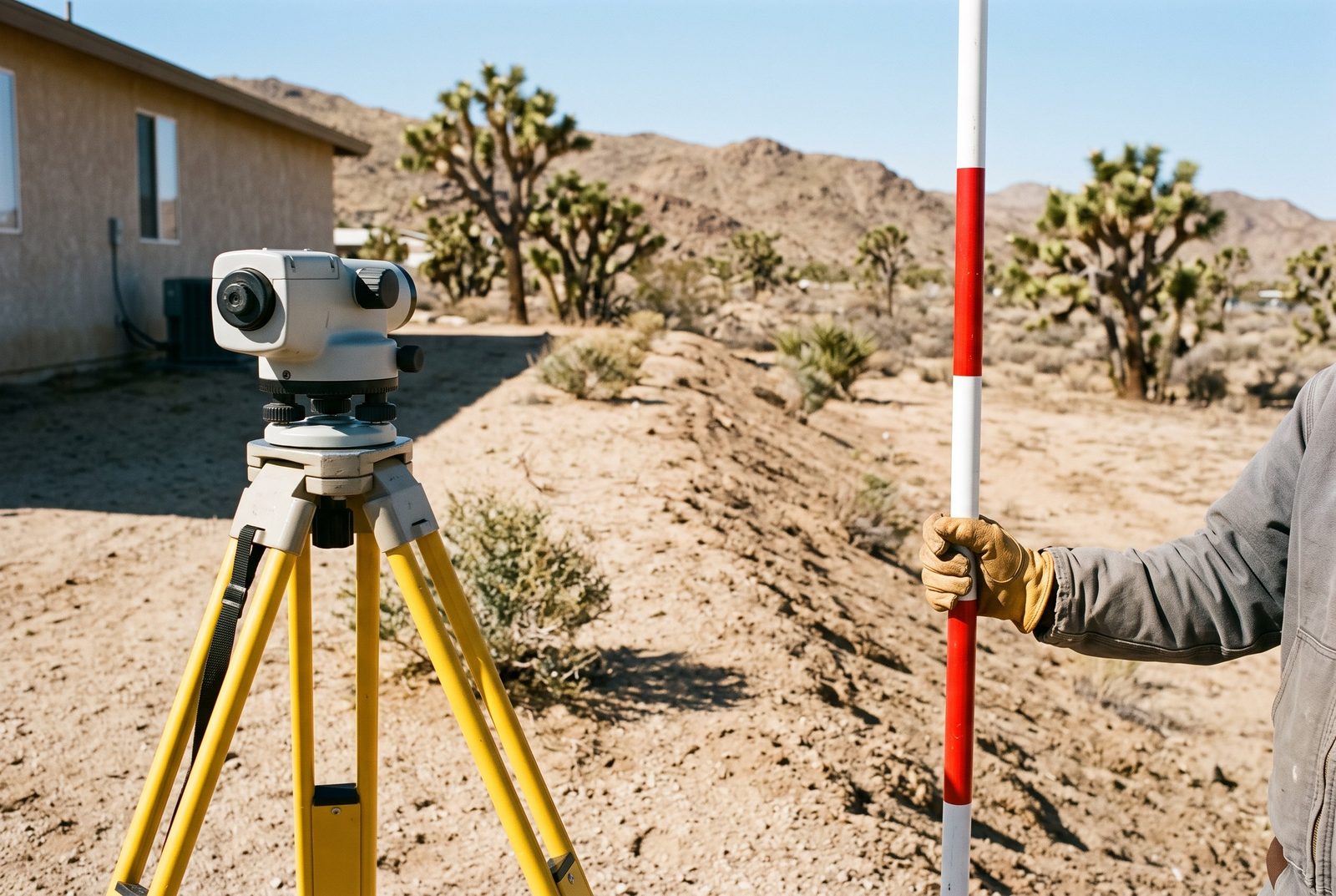
Shoot the grade
The run is measured on site, and we shoot the grade before cutting so the low end of every step lands inside the limit.
-
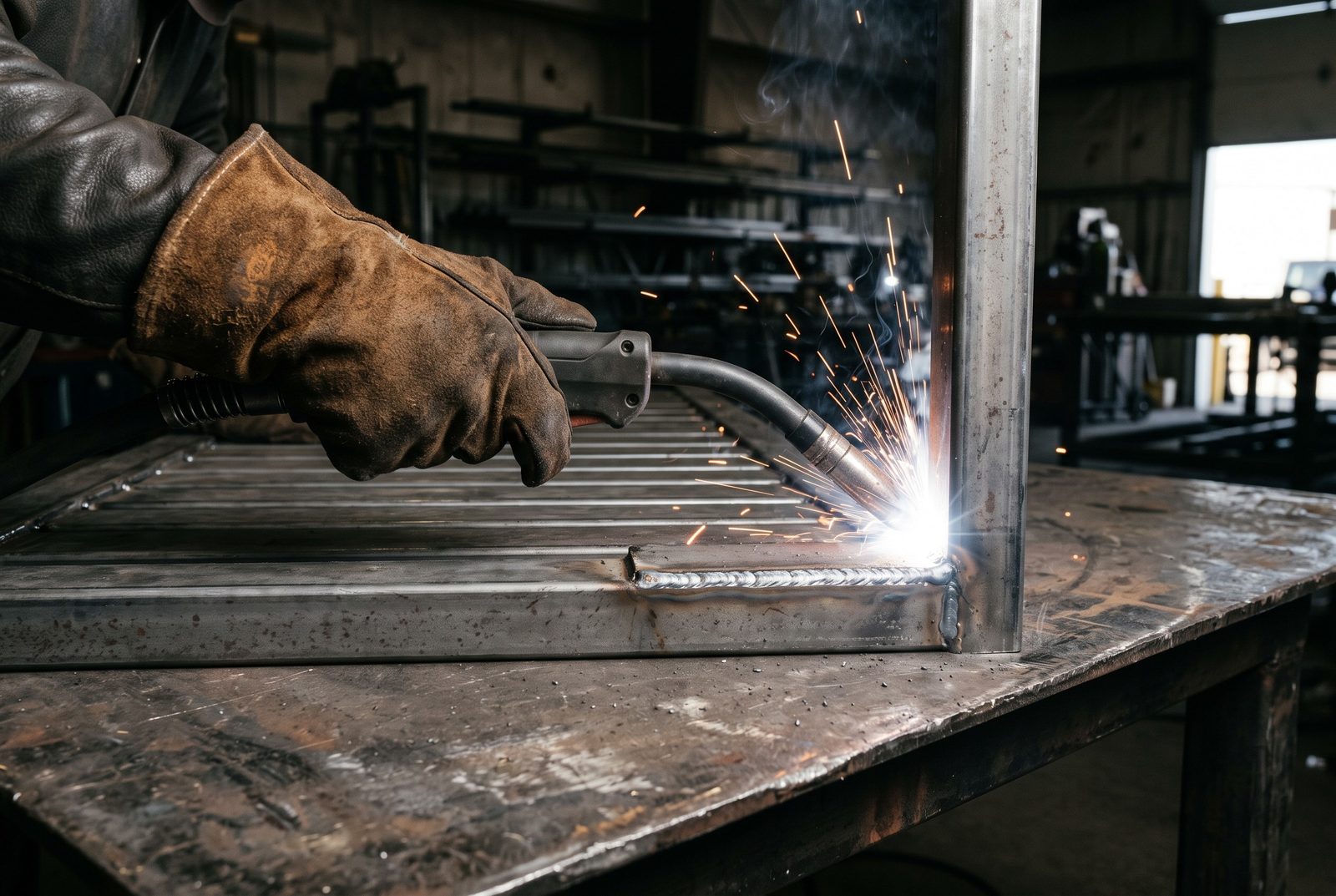
Weld each panel
Panels are cut and welded in the Division Street shop, one by one, to the measured run and the height its setback allows.
-
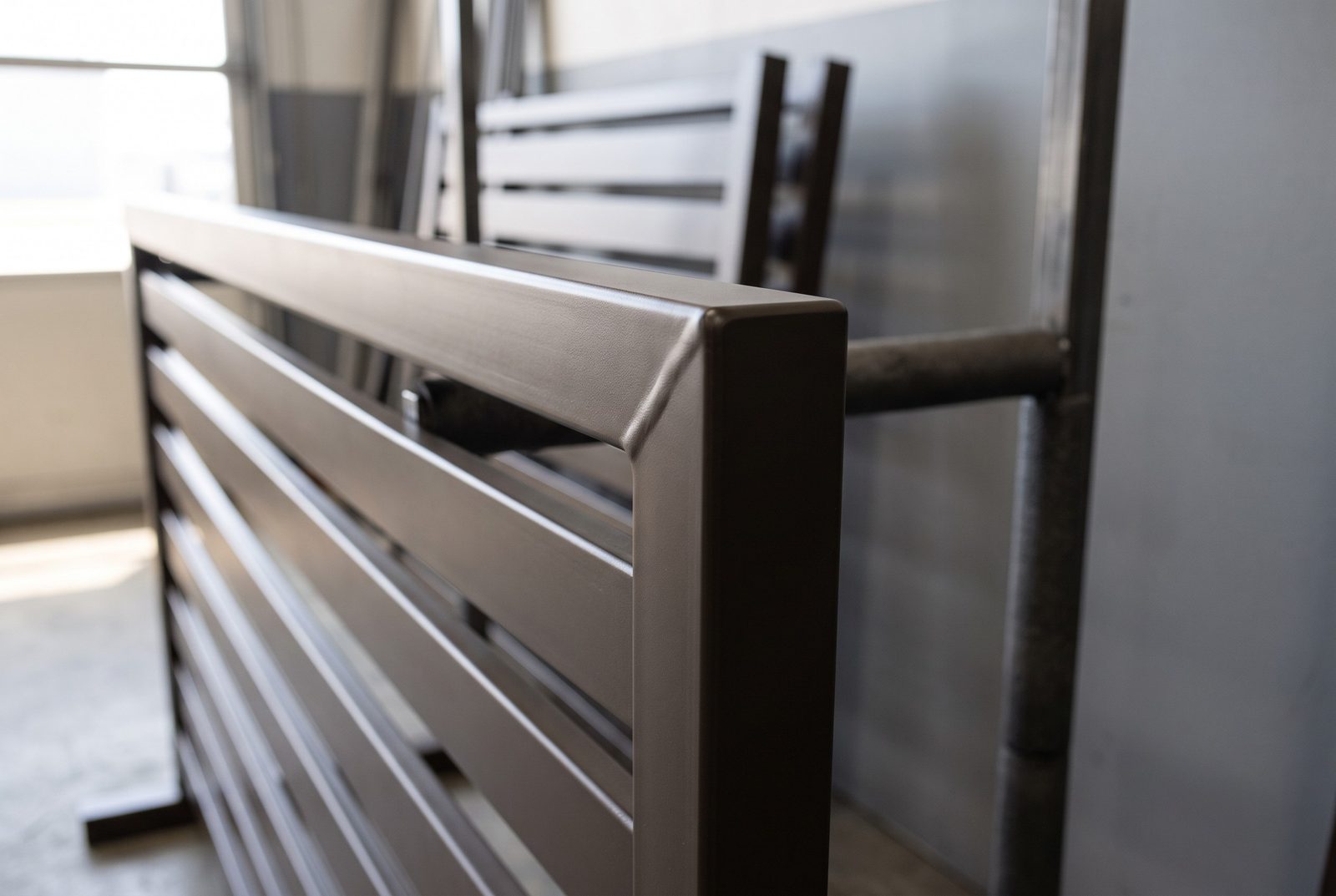
Dress, then coat
Cut ends and weld seams carry the thinnest coating, so they are dressed first. Then the panels are hot dip galvanized and powder coated.
-
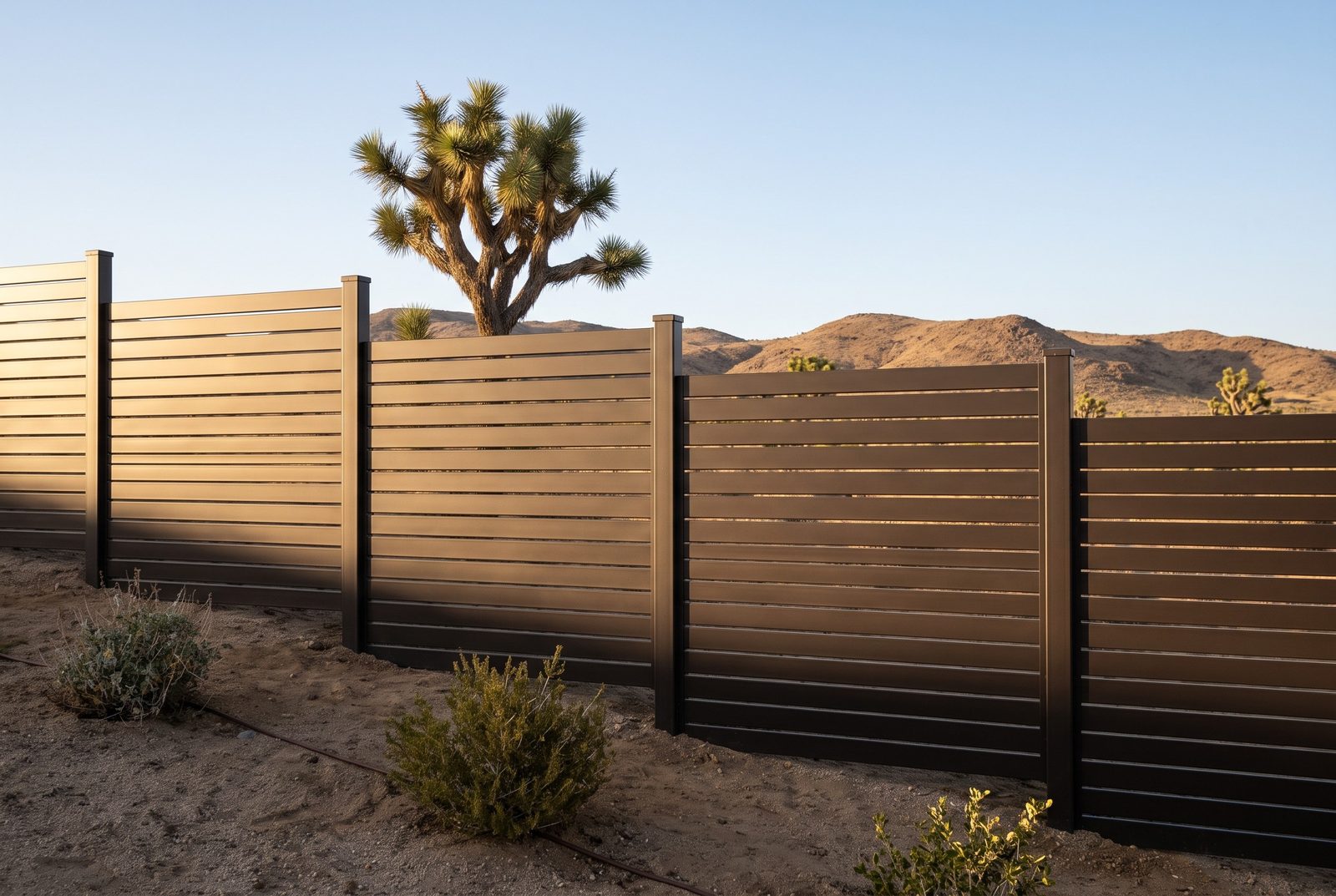
Step down the slope
A solid panel cannot rake without leaving daylight under it, so it steps down. Tall solid runs belong on the side and rear lines.


One fence, more than one height
Inside city limits, Lancaster Municipal Code 17.08.130 sets fence height by setback, so a single run around a lot can carry two limits:

- Front yard setback: up to 4 feet.
- Corner lot side yard setback: up to 4 feet.
- Side or rear setback: up to 6 feet.
- Director's review under 17.08.130.E: up to 25 percent above those figures.
In practice the stretch along the street is a low marker for the property line, and the tall panels belong on the side and rear lines. A solid steel run like the one in the rendering sits at full height there, and only there without a review.
Lots outside the city line follow different numbers. On unincorporated county ground next to the city, LA County Code 22.110.070 allows 3.5 feet in a required front yard and 6 feet in interior side and rear yards. A fence drawn to the city's front figure would stand half a foot over on county land. The parcel record tells you which side you are on.
Sloped ground
Section 17.08.130.C measures from finished grade at the base of the fence to the top edge of the steel. On a lot that falls along the run, a picket panel can be raked to follow the slope. A solid panel cannot rake without leaving a wedge of daylight under it, so it steps down instead, and the downhill end of each step is where it measures tallest. We shoot the grade before cutting so the low end of every step still lands inside the limit.
Open picket or solid steel
Pickets mark the line and keep the view. Solid steel closes the view and takes the wind off a patio. The price of privacy is load. The National Weather Service station at Fox Field in Lancaster recorded a 49 mph gust on January 8, 2026, and a solid face takes a gust like that on every square foot and passes it into the posts. Open pickets let most of it through.
So a solid run gets a heavier post section, closer post spacing and deeper footings than a picket run of the same height. We cut posts long enough for at least 36 inches below ground, more on a solid run. That figure comes from our own shop, not from a code.
Apartments and condos
Apartment developments have their own line in the code. Section 17.08.130.G allows a masonry wall, a tubular steel fence or a comparable material up to 6 feet on a multifamily development, which it defines as several buildings of three or more units each in the MDR and HDR zones. Welded picket fits that plainly. Whether a solid steel panel counts as comparable material is a question for planning, so get the answer before a solid run is ordered.
Pool fences
Where a fence is the pool's safety enclosure, California Health and Safety Code 115923 sets the standard: at least 60 inches tall, no gap that passes a 4 inch sphere, no more than 2 inches of clearance at the bottom, and nothing on the outside face a child could climb. In a back yard the 6 foot limit leaves room. Through a front yard setback it does not, since 60 inches is more than 4 feet; a director's review adding 25 percent reaches exactly 60 inches, and that review is the route 17.08.130 offers. Pool runs also get raked rather than stepped on a slope, because a stepped panel opens gaps at the bottom.
Finish
Cut ends and weld seams carry the thinnest coating, so in the Lancaster shop they get dressed before anything is sprayed. The panels are then hot dip galvanized to ASTM A123, which keys zinc thickness to the wall of the tube, and powder coated over the zinc after the thermal prep in ASTM D7803. Ask for an AAMA 2604 class powder rather than the basic 2603 tier.
Gates and repairs
Most runs have an opening. A gate hangs on hinges instead of resting on a footing every few feet, so its post and hardware are sized on their own; see custom steel gates in Lancaster. For an existing fence that leans or has rusted, see steel fence repair in Lancaster. The steel fences page explains post loads and coatings in more depth.
To start, give us the length of the run, the height you want on each side, and where your setback lines fall if you know them. Photos that show the slope help, along with where a gate goes and how wide it needs to be.
Questions about steel fences in Lancaster
How tall can a steel fence be in my Lancaster back yard?
Can I run a solid steel fence along the street?
Does a solid fence need bigger posts than a picket fence?
Can a steel fence be my pool barrier?
What makes one steel fence cost more than another?
Do you build steel fences for apartment properties in Lancaster?
Do you also do chain link, wood or vinyl?
More of our work in Lancaster
Steel fences in nearby towns
Need steel fences in Lancaster?
Free estimates. Send a photo of the job, or call and we will set a time.