Steel Fence Repair in Lancaster, CA
If the fence is welded steel, we can repair it: picket and rail, solid steel panels, pipe and ranch rail, and the steel posts under all of them. Chain link, wood and vinyl are not welding work, so we turn those down on the phone instead of driving out to look.

How a damaged steel fence gets repaired, step by step
-
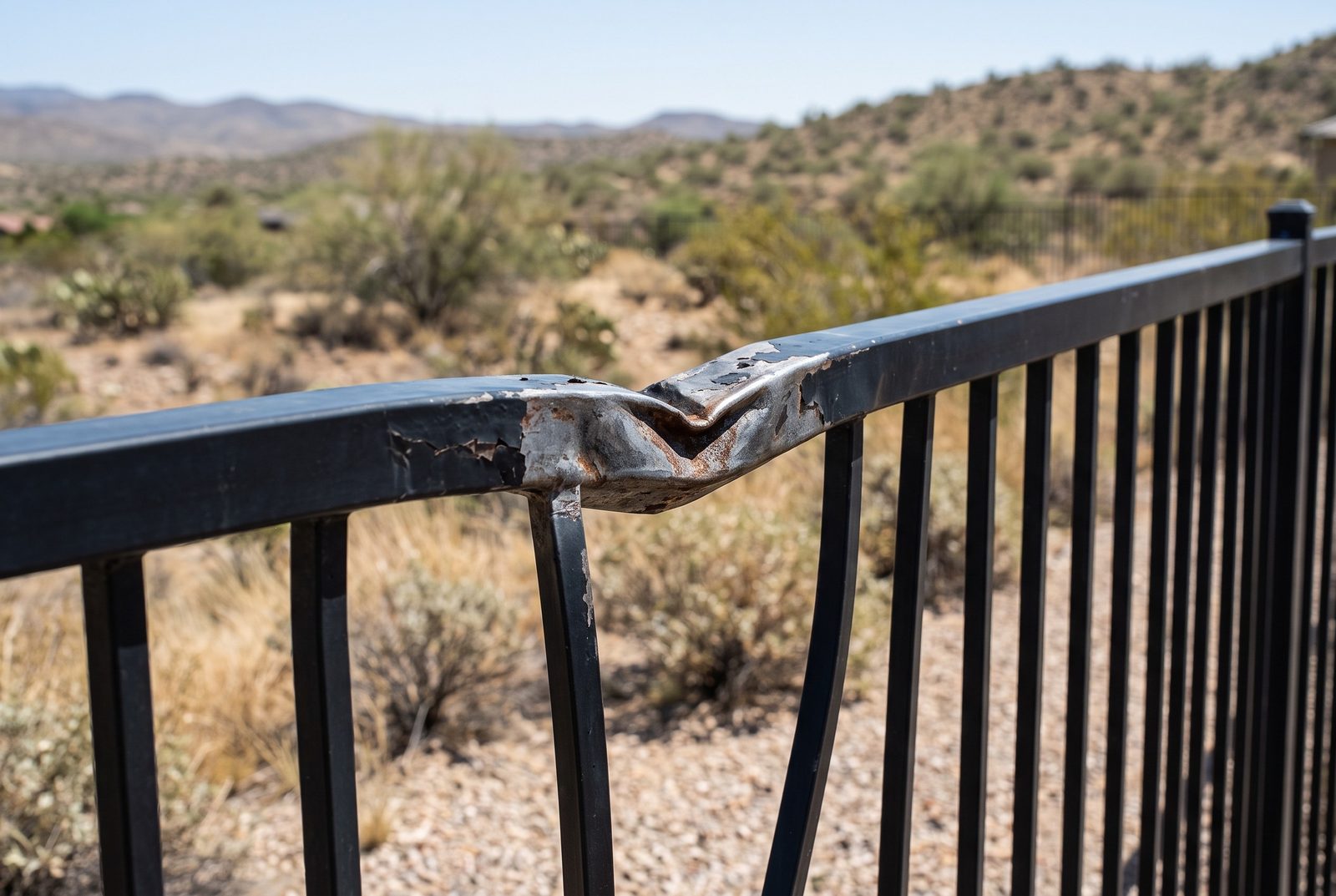
Read the bent rail
A bow spread over several feet pulls back close to true. A sharp crease means the wall has folded, so that length is cut out and replaced.
-
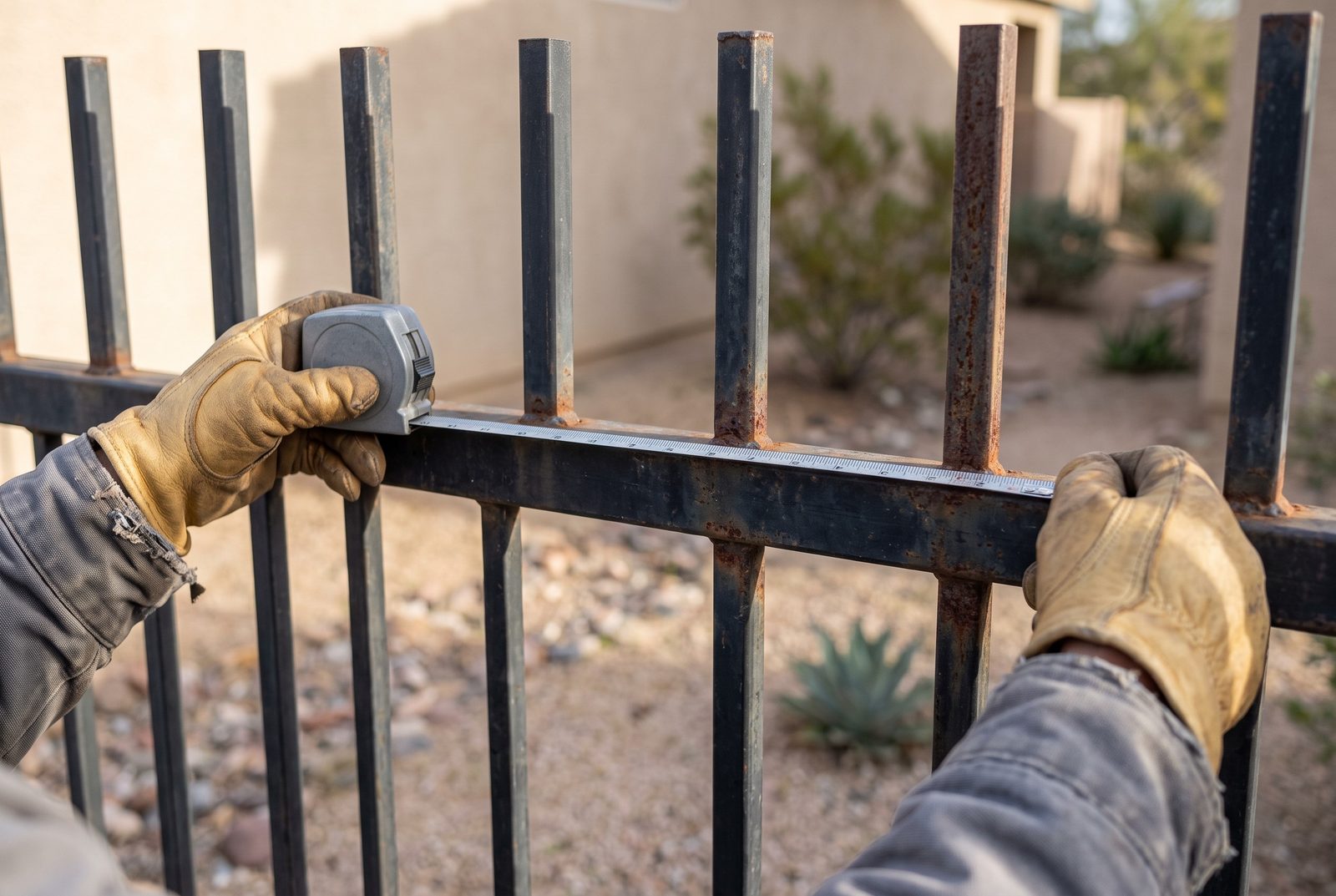
Measure what is there
Older fences often use sizes that are no longer stocked, so we measure the pickets, rails and spacing that are already there.
-
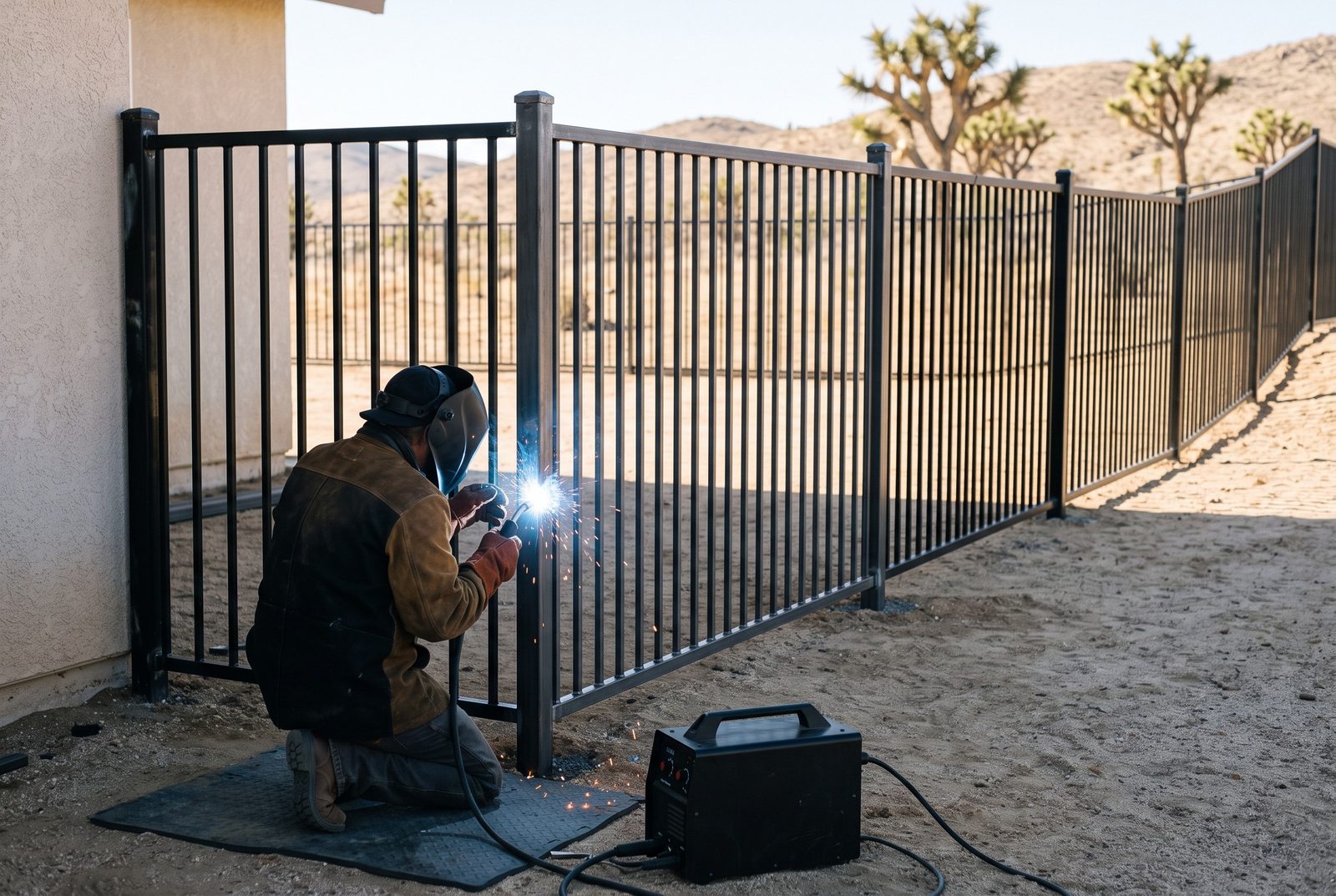
Weld the section in
Most repairs are one section between two sound posts. The new section is built in the shop to match, then welded in on site.
-
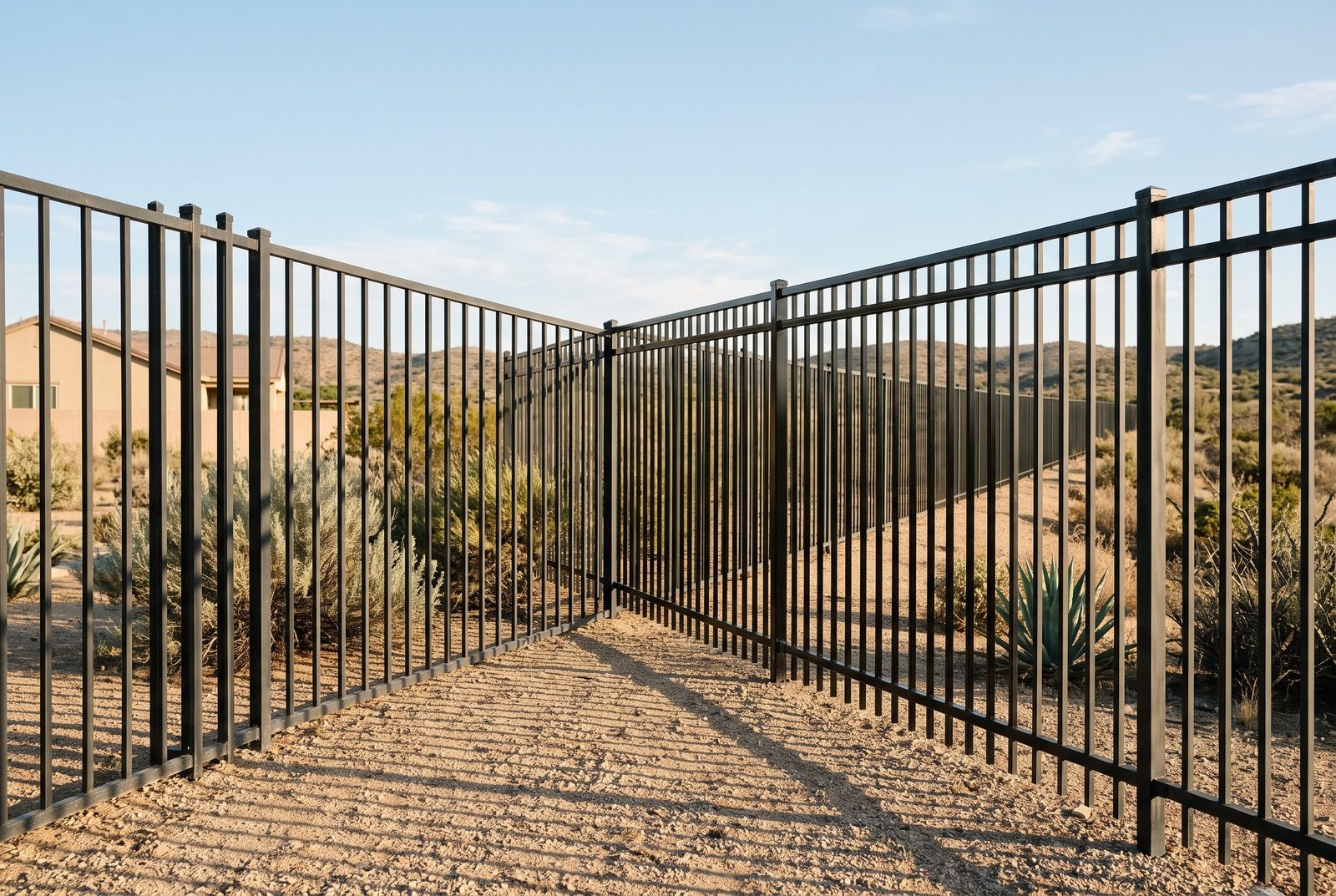
Recoat the joints
A fence standing in concrete cannot go back to a galvanizer, so each weld area is ground clean and recoated. Fresh coating reads a shade different beside weathered coating.


Is it a steel fence?
- Yes: picket and rail panels, the fence most people call wrought iron, which is steel tube welded into a rail.
- Yes: solid steel panels on a welded frame.
- Yes: pipe and ranch rail.
- Yes: the steel posts under any of these.
- No: chain link, wood or vinyl, in any amount.
Chain link is woven wire stretched over a pipe frame. Putting it right takes fabric, ties, tension bands and a stretcher, which is another trade with other tools. Wood and vinyl do not take a weld at all.
Reading the damage
A fence that leans has moved at the footing, not at the panel. Wind pushes on the panel, the panel levers the post, and only the concrete under the ground pushes back. The National Weather Service station at Fox Field in Lancaster logged a 40 mph sustained wind on April 2, 2026 and a 50 mph gust on April 11. A solid run takes a blow like that across its whole face, where a picket run lets most of it slip through, so solid runs tend to lean first. Pulling a panel straight over a footing that has turned lasts a season or so. The footing has to be redone, and any replacement post we fabricate for it is cut long enough to sit at least 36 inches below ground, more under a solid panel. That figure is our own practice; no published standard sets it.
A bent rail is either a bow or a crease. A bow spread over several feet has kept its wall, and it pulls or heat straightens back close to where it was. A sharp crease or flat spot means the wall has folded, and folded tube never gets its stiffness back, so that length is cut out and new tube welded in between two sound posts. After a vehicle hit, look past the panel: the impact runs down the rails into the posts on both sides, and those get checked before anyone prices the panel.
Rust works upward from the bottom. The lower rail of a picket panel is an open channel, so it holds sprinkler spray and rain long after the rest has dried, and every picket stands in it on a cut end. Watch for rust blooming just above the rail and paint lifting in a line along it. A picket that rattles when you pull it has already let go of its weld. Push a screwdriver into a picket bottom and into the foot of a post. Where the tip stops, the steel will take a weld. Where it goes through, that piece is cut away and replaced.
Patch or new run: the code question
A patch keeps the fence that was already there. A replacement run is a new fence, and it has to meet today's rule for the lot. Inside city limits that rule is Lancaster Municipal Code 17.08.130: up to 4 feet within a front yard or corner lot side yard setback, up to 6 feet within a side or rear setback, measured from finished grade at the base of the fence. A director's review can approve up to 25 percent more. On unincorporated county ground beside the city, LA County Code 22.110.070 allows 3.5 feet in a required front yard. Neither code names a length at which a patch becomes a replacement, so describe the job to the planning counter before a long stretch is rebuilt.
Where the fence is a pool's safety enclosure, the repaired stretch has to work as one again. California Health and Safety Code 115923 asks for at least 60 inches of height, no more than 2 inches of clearance underneath, no gap a 4 inch sphere can pass, and an outside face with no handholds or footholds. A wide rail welded in at knee height can fail a fence that passed the week before.
How a repaired section is built
Most repairs are one section between two sound posts. We measure the pickets, rails and spacing that are there, build the new section in our Lancaster shop to match, and weld it in on site. Older fences often use sizes that are no longer stocked. Where nothing matches, rebuilding the whole panel between two posts reads as deliberate, while a patch of odd pickets reads as a repair.

Welding burns off the coating for a few inches around each joint, and a fence standing in concrete cannot go back to a galvanizer. So the weld area is ground clean, given a zinc rich coat and then a topcoat. New steel built in the shop can be galvanized under powder before it leaves, a pairing the American Galvanizers Association puts at 1.5 to 2.3 times the combined life of the two coatings used alone. Fresh coating beside weathered coating will read a shade different in daylight.
A gate in the same run is a separate job; see gate repair in Lancaster. For a new run, see steel fences in Lancaster. The steel fence repair page goes deeper on method and coatings.
Before we come out
Send photos looking down the line from each end, close shots of whatever failed, and the length of the damaged stretch. Tell us whether a vehicle hit it, whether a sprinkler throws water on the steel, and whether the fence doubles as a pool barrier. Call the Lancaster shop at (818) 220-8704 on weekdays from 8 to 5.
Questions about steel fence repair in Lancaster
Do you repair chain link or wood fences in Lancaster?
Is a wrought iron fence something you can weld?
How can I tell if a rusted section can be saved?
My fence leans after a windy spell. Can you just straighten it?
Does a repair have to meet today's height rule in Lancaster?
Can you match the pickets on an old fence?
What does steel fence repair cost?
More of our work in Lancaster
Steel fence repair in nearby towns
Need steel fence repair in Lancaster?
Free estimates. Send a photo of the job, or call and we will set a time.