Gate Repair in Lancaster, CA
Gate repair here means welded steel repair. A leaf that drops at the latch end, a hinge torn loose, a frame out of square, a slide gate fighting its track: those we fix, on site or at our Lancaster shop. A dead motor, its controls or its wiring belongs to an operator technician, and we say so when you call.

How a sagging steel gate gets fixed, step by step
-
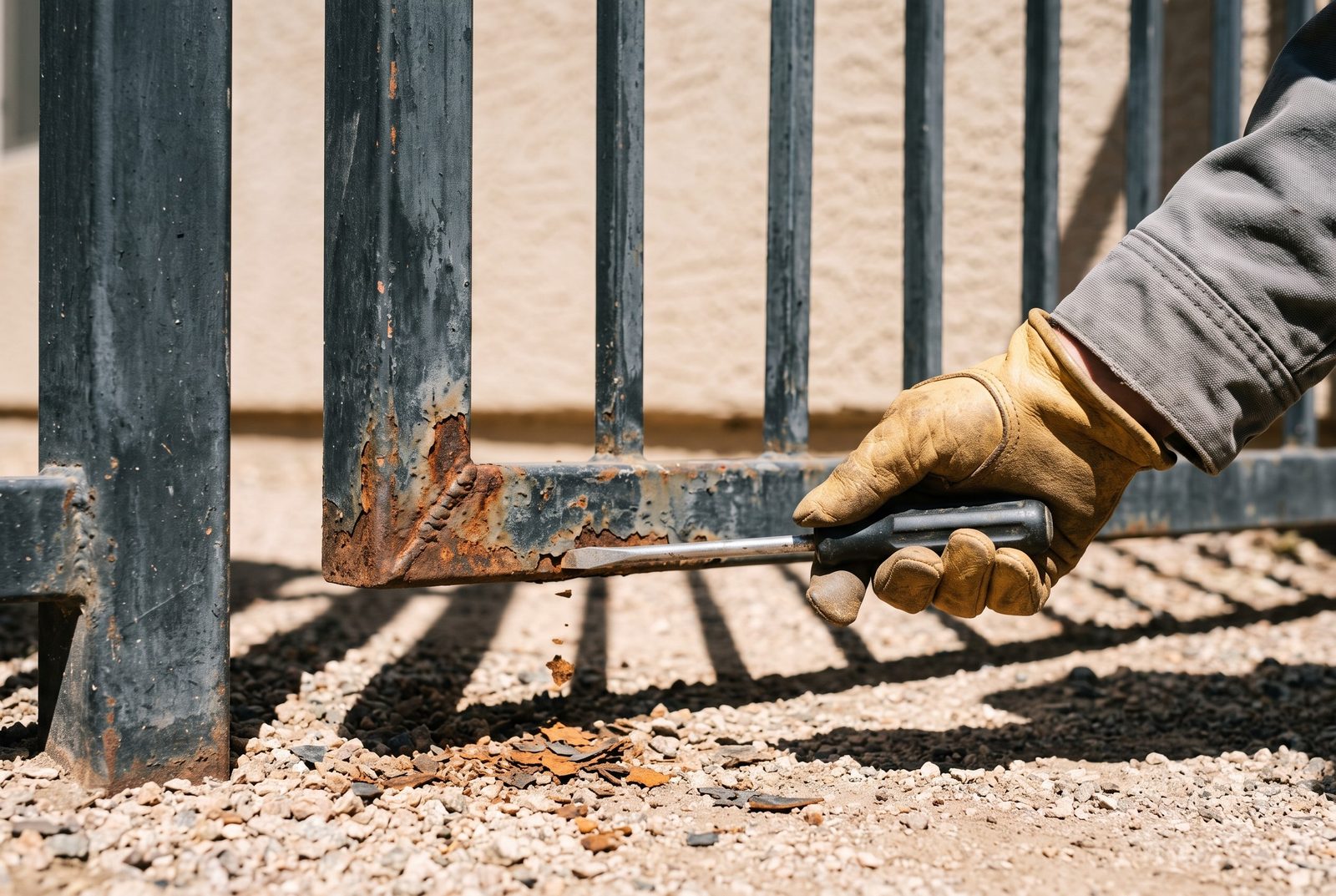
Test the bottom rail
Push a screwdriver into the underside of the bottom rail near each corner. Water thins the tube from inside, and where the tip holds, the gate repairs.
-
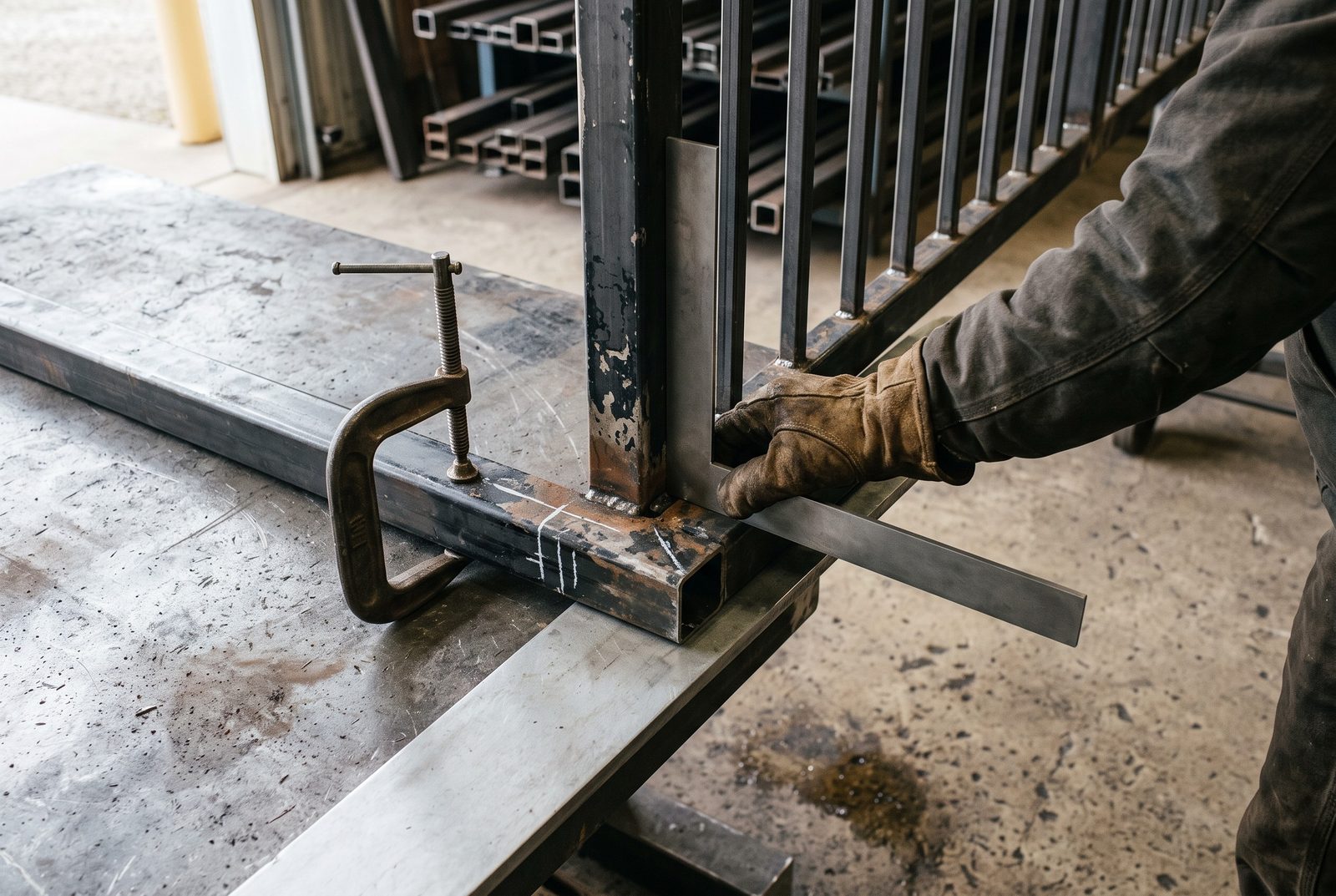
Pull the frame square
A frame folded out of square travels to the Division Street shop, where it is clamped flat on the table and pulled square.
-
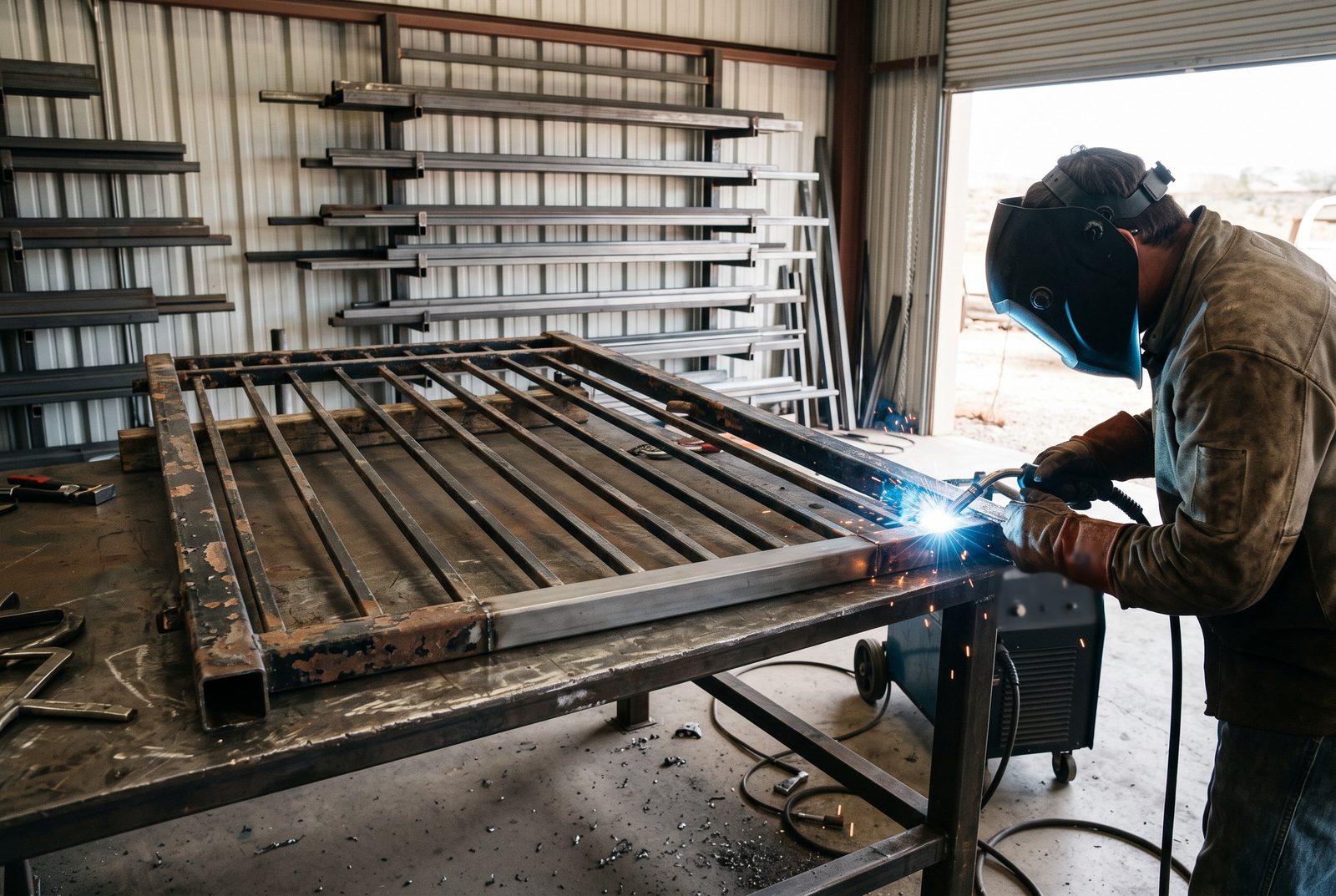
Splice in new tube
Where the screwdriver goes through, that rail is cut out and new tube spliced in. Worn hinges are cut off and new ones welded to sound steel.
-
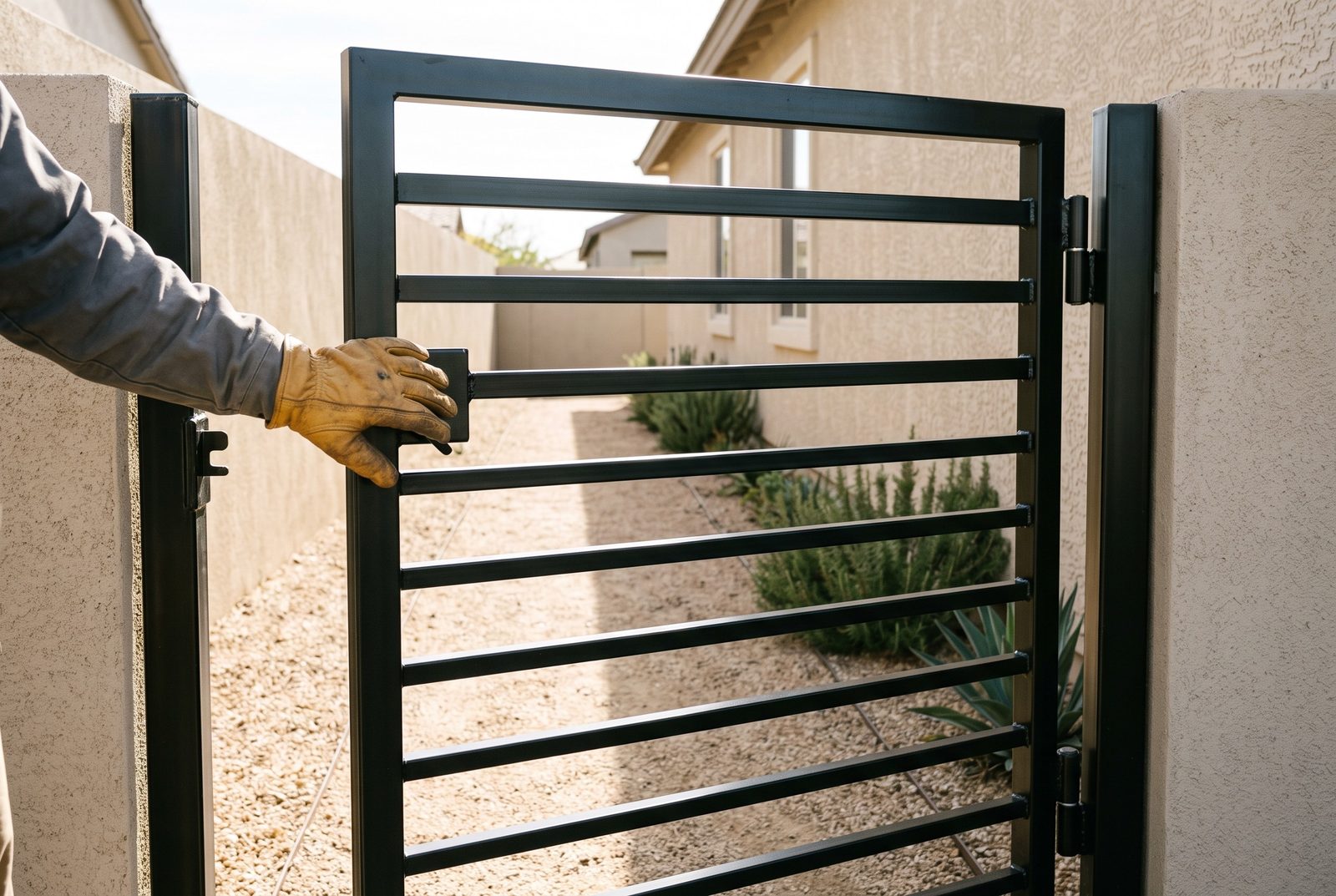
Walk it by hand
A repaired swing leaf moves freely by hand and stays wherever you stop it, and the latch meets its keeper without anyone lifting the gate.


First, rule out the motor
If the gate is powered, release the operator and walk the gate through its whole travel by hand. A swing leaf should move freely and stay wherever you stop it. A slide gate should roll with one hand. If it does, the fault is in the machine and the call goes to the operator trade. If it drags, binds or drifts on its own, the steel is at fault, and a new motor would only fight the same resistance the old one did.
It drags at the latch end
Close the gate and look down the gap between the latch edge and the post. A gap shaped like a wedge, open at the top and pinched near the ground, says the leaf has dropped on its hinges. A gap that stayed even but grew wider says the hinge post has tipped away from the opening. A gate that scrapes at one spot in its swing and clears everywhere else has met a high spot in the drive, which no weld will cure.
A dropped leaf has one of two causes. Either a hinge has worn or torn, or the frame has folded out of square. Worn hinges are cut off and new ones welded to sound steel. A folded frame travels to the Division Street shop in Lancaster, where it is clamped flat on the table, pulled square, and given a diagonal brace so it cannot fold again.
It will not latch, or the leaves do not meet
When a leaf drops, the latch drops with it and lands below its keeper. Lifting the gate to make it latch is the giveaway. On a pair of gates, the passive leaf usually holds on a drop rod in a sleeve set in the drive, and a sag on that side puts the rod beside the sleeve instead of in it. Forcing the latch from there splits the welds along the meeting edge. Level both leaves, then reset the keeper and the receiver to match. A longer rod only hides the drop.
The post moves
Push on the hinge post. If it rocks, the concrete has turned in the ground, and each swing of the gate pries it further. No weld on the leaf fixes a footing, and the footing has to be redone before the gate will stay true. The steel side of that job is ours: a heavier post where the old one was too light for its leaf, or a plate along the hinge line, cut long enough to sit at least 36 inches below ground and longer under a wide leaf. No code sets that depth; it is our shop practice.
Solid leaves are hardest on posts. The National Weather Service station at Fox Field in Lancaster logged a 50 mph gust on April 11, 2026. A solid face takes the whole of a gust like that and passes it through the hinges into the post, where an open picket leaf lets most of it go by. A solid gate that keeps dropping may need a heavier hinge or post, not only a fresh weld.
A slide gate that binds
Where it binds tells you what failed. Resistance at one point in the travel points to the track: a bent length, or grit packed into the groove. Resistance the whole way along points to the rollers, or to a frame that has sagged down onto them. A roller with a flat spot thumps once each turn, loud enough to hear from the house. We straighten or replace track and change rollers. On a powered slide gate, exposed weight bearing rollers 8 feet or less above grade get their guards back, as ASTM F2200 requires.

Rusted, or finished?
Surface rust and chalky paint look worse than they are. The bottom rail is the real test, because water gets inside the tube and thins the wall from within while the outside still looks solid. Push a screwdriver into the underside near each corner. Where it holds, the gate repairs. Where it goes through, that rail is cut out and new tube spliced in. When the bottom rail, the hinge side and both lower corners have all gone, a new leaf is the better call, built to the height the lot allows now. Inside city limits that is set by Lancaster Municipal Code 17.08.130: 4 feet in a front yard setback, 6 feet in a side or rear setback.
When there is a motor on it
An operator brings standards into the repair. ASTM F2200 holds a powered gate to falling no more than 45 degrees from vertical if it leaves its supporting hardware, so stops, keepers and catch brackets get welded on, and a horizontal slide gate needs positive stops at both ends of travel. UL 325 treats a gap under 16 inches between moving steel and a fixed edge, up to 6 feet above grade, as an entrapment zone, so a bracket we add must never open one. What the operator technician gets back from us is a gate that moves freely. Force settings, sensors and wiring stay with that trade.
What to send us
Two photos: the gate closed, shot square on from outside the opening, and the hinge side with the gate open. Two measurements: the opening from post to post, and the latch gap at the top and again at the bottom, since the difference shows how far the leaf is out of square. Then tell us whether a motor runs it and whether a pool sits behind it. Call the Lancaster shop at (818) 220-8704, weekdays 8 to 5, with someone on call over the weekend.
A fence leaning beside the gate is a separate job; see steel fence repair in Lancaster. For hinge, latch and brace work in more detail, see gate welding in Lancaster, and the gate repair page walks through each fault.
Questions about gate repair in Lancaster
Do you fix gate openers in Lancaster?
Does a sagging gate have to be replaced?
Can you repair the gate where it hangs?
My gate post is loose. Can you weld it?
Why does my gate only latch when I lift it?
My pool gate stopped closing by itself. What does the repair have to meet?
If the gate is replaced, do Lancaster or county height rules apply?
What does gate repair cost in Lancaster?
More of our work in Lancaster
Gate repair in nearby towns
Need gate repair in Lancaster?
Free estimates. Send a photo of the job, or call and we will set a time.