Gate Welding in Palmdale, CA
Gate welding covers the steel jobs a gate needs over its life: hinges welded onto sound metal, latches and drop rod keepers, a brace for a leaf that has started to droop, and a frame cut down or built new when the opening changes. In Palmdale much of it is welded right at the gate.

How gate welding works, step by step
-
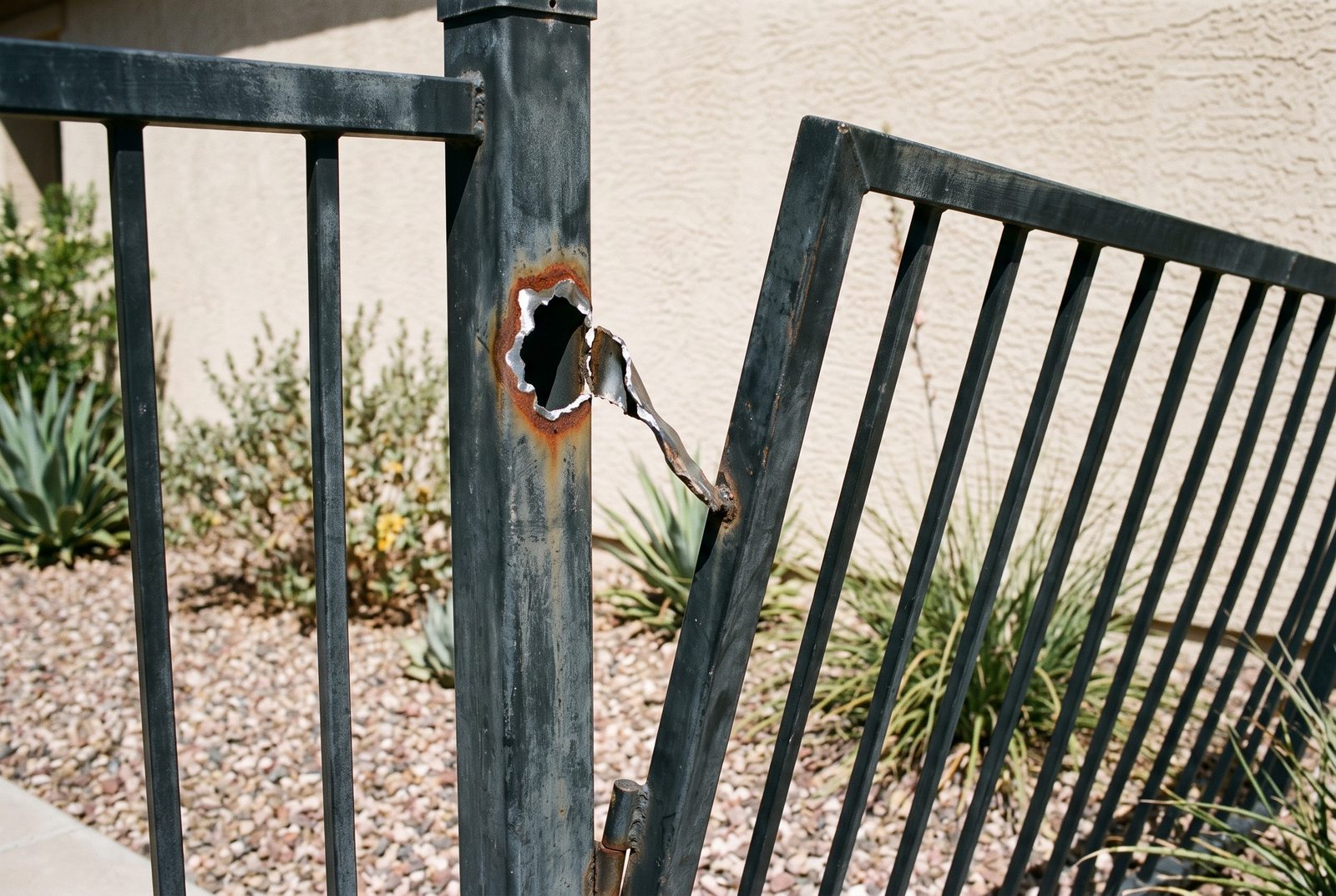
Find why it tore
A hinge holds only as well as the steel behind it. When one tears away, the post wall is usually too light for the leaf swinging on it.
-
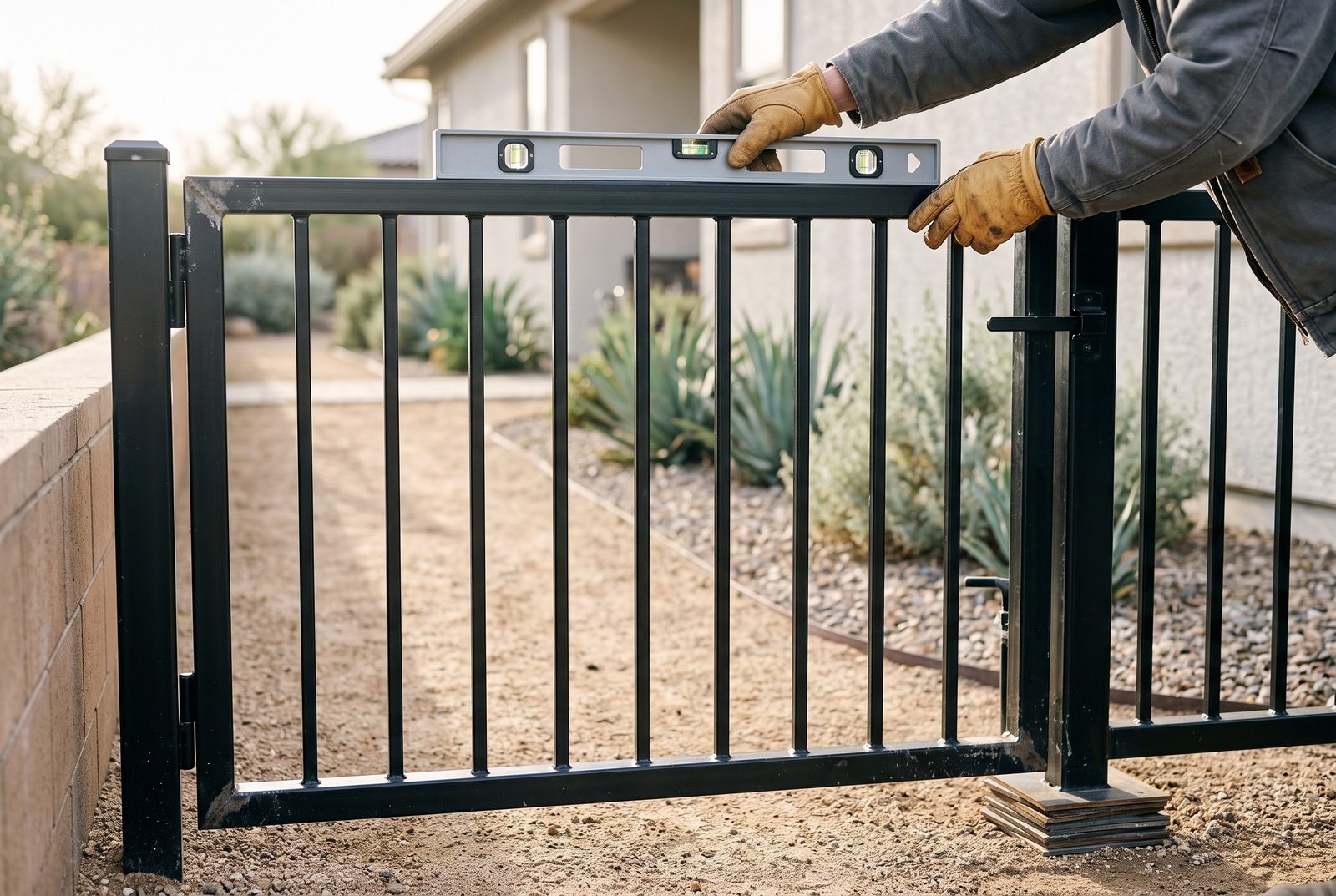
Level the leaf first
A latch that misses its keeper usually means the leaf has settled. The leaf comes back to level first, then the latch is welded where it lines up.
-
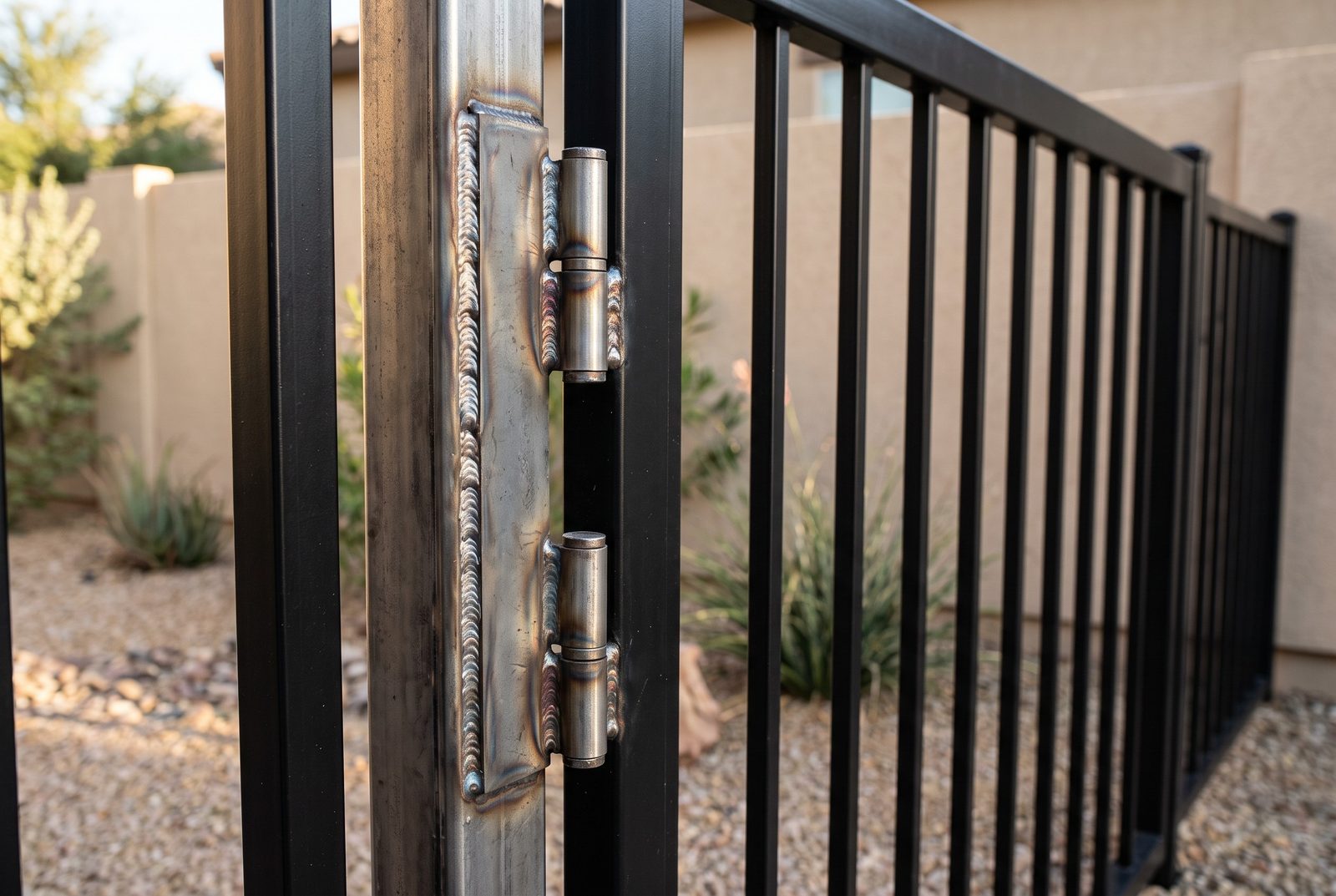
Back the hinge line
The hinge line gets a reinforcing plate or a heavier post section. Hinges worn oval are cut off and new ones are welded to clean steel.
-
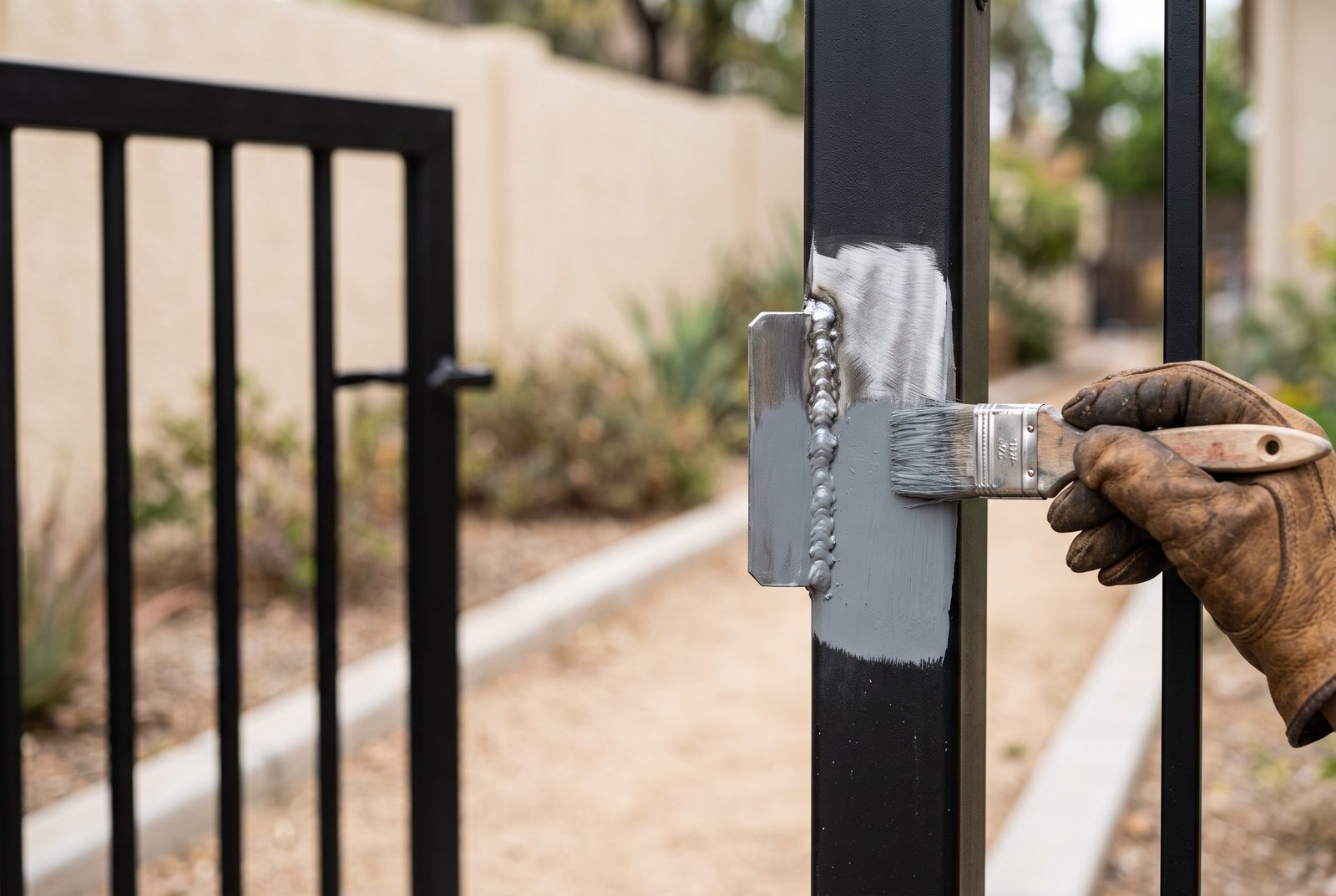
Coat the weld zone
Welding burns the coating off around every joint, so the weld zone is ground back to bright steel, coated with a zinc rich compound, and topcoated.


Hinges that stay where they are welded
A hinge holds only as well as the steel behind it. When a hinge tears away from a post, the post wall is usually too light for the leaf swinging on it, and a new hinge welded to the same thin wall tears out again. So the hinge line gets a reinforcing plate, or the post gets a heavier section, before any new hinge goes on. Hinges worn oval are cut off and replaced with new ones welded to clean steel, which stops the leaf from dropping a little further every season.
Every swing levers the leaf against its post. A leaf that has to be lifted or shoved to make the latch catch adds a hard push to every cycle, and those pushes land on the hinge welds. A sagging leaf and a cracked hinge weld tend to show up together for that reason.
Latches, keepers and drop rods
A latch that no longer meets its keeper is usually reporting a leaf that has settled or a post that has moved. Welding the keeper lower chases the problem. We bring the leaf back to level first, then weld the latch hardware where it lines up. On a double gate the same goes for the drop rod and its receiver: the passive leaf comes back to level before anything is welded at the middle.

Pool gates carry a legal rule for the latch. California Health and Safety Code 115923 has the access gate open away from the pool, close by itself and latch by itself, with the latch no lower than 60 inches above the ground. A latch bracket welded on at that height, on a leaf that hangs true, is how a steel gate meets it.
Braces, frames and a changed opening
A leaf goes out of square slowly. The welded corners give a little under the weight of the frame, and the latch end sinks. A diagonal brace running from the bottom of the hinge side up to the top of the latch side stops that, but it has to go into a frame that is already square. A racked leaf comes back to our Lancaster shop and gets clamped flat on a bench, and the brace is welded in once the frame is true.
When an opening gets wider or narrower, a new frame is often the cleaner answer than stretching the old one. We measure the opening and build the frame in the shop to those numbers. In Palmdale that new frame is open steel. Palmdale Municipal Code 17.86.040 lists solid metal among its prohibited fencing materials, so a picket or bar leaf is what we weld here, never a leaf faced in sheet.
Which way a driveway leaf swings
Palmdale has a rule for gates that cross a driveway. Inside the required front setback of a home lot, a driveway gate has to be an automated rolling gate or open inward, away from the street, and any main gate opens away from the public right-of-way. If you are changing hinges on a driveway gate anyway, that rule should decide which face of the post they land on. Moving the hinges to the property side and welding new stops is welding work. Whether an older gate that swings out has to change is a question for Palmdale Planning, not for us.
Steel ready for a motor
Many gates get welding work just before they get a motor. A frame that has racked, or hinges worn oval, will fight any operator, so the steel is put right first. We weld on the mounting plate, run a sleeve through the post so the cable has a protected path, and add keepers and catch brackets. ASTM F2200 says a gate must not fall more than 45 degrees from vertical if it comes off its supporting hardware, and on a slide gate it calls for positive stops at both ends of travel. Those are welded parts. The operator itself, its electronics and its wiring belong to other trades.
Welding at the gate
Hinges, latches, keepers, cracked welds and broken pickets are welded on site in Palmdale. Wind is the main thing a site weld has to manage here, and our welding in Palmdale page explains how it shapes the process. Welding burns the coating off for a short way around every joint, and a gate in use cannot go back into a galvanizing kettle. So the weld zone is ground back to bright steel, coated with a zinc rich compound, and topcoated.
A gate that drags, sags or binds is diagnosed on our gate repair in Palmdale page. A new gate built to your opening is on custom steel gates in Palmdale, and the full detail on frames and finishes is on our steel gates page.
Questions about gate welding in Palmdale
Can you weld a new hinge onto my existing gate post?
My driveway gate swings out toward the street. Can you make it swing in?
Can you weld sheet metal onto my picket gate for privacy?
Can you move the latch on my pool gate?
Does my gate come to the shop or do you weld it here?
Will the welded spot rust?
Do you work on gate openers?
What drives the cost of gate welding?
More of our work in Palmdale
Gate welding in nearby towns
Need gate welding in Palmdale?
Free estimates. Send a photo of the job, or call and we will set a time.