Dump Body Installation
Body mounted to your chassis, hoist set and plumbed, gate and tarp fitted. Drop the truck at the Penrose Street shop.
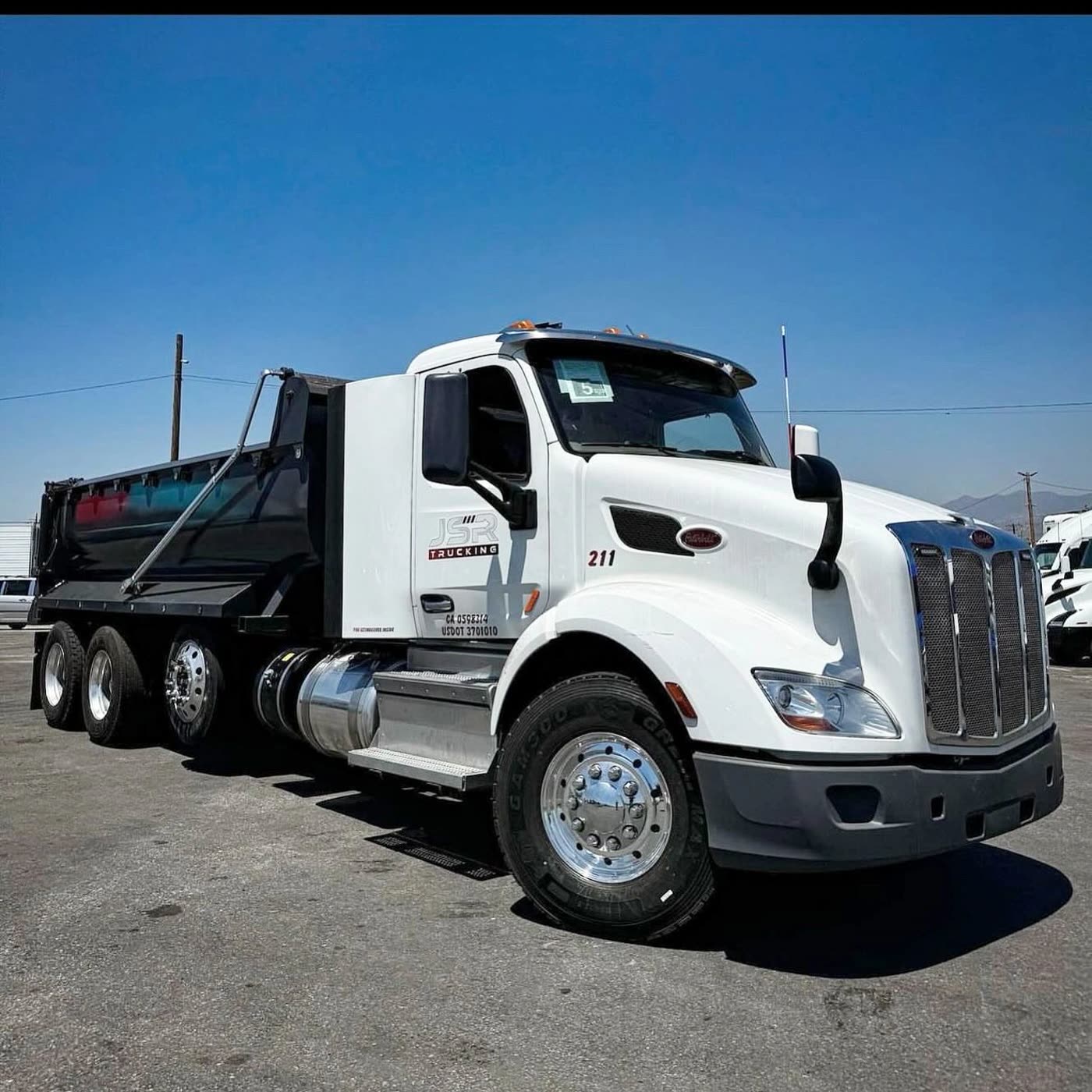
Installing a dump body joins two things built by different companies, a body and a chassis. The chassis maker publishes the rules for that joint in a body builder manual, and those rules decide most of how the install is done. We work to the manual for the chassis in the bay. The examples on this page come from Peterbilt's 2024 Heavy Duty Body Builder Manual, because it is public and specific.
The first rule is about where not to drill. Peterbilt's manual says not to drill holes in the upper or lower flange of a frame rail when mounting a body, because a modified or damaged flange can make the rail fail early. The body goes on with mounting brackets or U-bolts instead. If a U-bolt does not fit, the manual says to use a larger one rather than notch the flange to force it.
Holes that do go into the rail get drilled, never torched. The manual gives the reason plainly: heat from a torch changes the material properties of the rail and can lead to cracks. It caps each hole at 0.060 inch over the bolt diameter, and asks for hole centers at least twice the diameter of the largest hole apart. Any unused hole gets a bolt and nut torqued into it.
Between the body subframe and the top flange of the rail goes a spacer. Peterbilt calls for one on every install, to stop the two steel faces chafing and corroding against each other, and for bracket mounts it recommends a strip of rubber or a plastic such as Delrin or nylon. It is a small part. Leaving it out is how the top of a rail gets worn thin.
Clearance comes next. The body has to sit high enough that the tires cannot reach it as the suspension moves, and Peterbilt's minimum is 8 inches between the top of the tire and the bottom of the body. We measure it before the body is bolted down, because it is far easier to change a spacer height than to move a mounted body.
Once the body is on, the manual requires a front and rear alignment before the truck goes back into service. A body changes how a truck sits, and the alignment is where that shows up first.
The body also has to be safe to work under. OSHA's construction standard, 29 CFR 1926.601(b)(10), requires trucks with dump bodies to carry a positive means of support, permanently attached and able to be locked in position, so the body cannot come down while maintenance or inspection work is being done. That body prop is part of the install.
The work covers bodies built here and bodies bought elsewhere. If the chassis is too short for the body, the frame stretching gets planned into the same visit. Bring the truck to the Penrose Street shop in Sun Valley with the chassis make and model, and the body's drawings or dimensions if you have them.
Work from our shops
Questions about dump body installation
Will you fit a body I bought somewhere else?
Why is the body not simply welded to the frame?
How high does the body need to sit?
Does the truck need anything after the body goes on?
What is the body prop for?
Often paired with dump body installation
Need dump body installation?
Free estimates. Tell us the job and we will send back a spec and a price.